_edited.png)


Myanmar Junta’s Rakhine Offensive Kills Over 70 Civilians but Makes No Territorial Gains: ISP-Myanmar
News Analysis, October 5, 2026

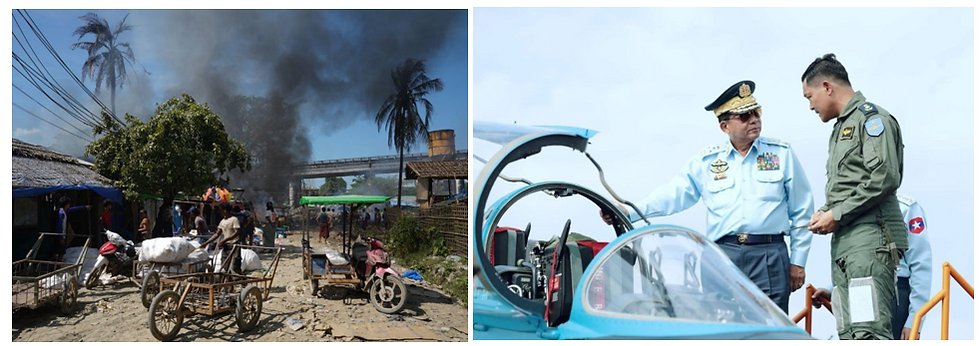
Myanmar’s military has launched one of its largest coordinated offensives against the United League of Arakan/Arakan Army (ULA/AA) in recent months, deploying around 2,000 troops across multiple fronts and combining ground, naval and air attacks. Yet, according to a new assessment by the Institute for Strategy and Policy–Myanmar (ISP-Myanmar), the offensive has so far failed to produce any tangible territorial gains while causing more than 70 civilian deaths.
The offensive began in early September and has affected not only Rakhine State but also neighboring areas of Magway, Bago and Ayeyarwady regions. Fighting has intensified around Kyaukphyu, Sittwe and Ponnagyun, as well as several areas along the borders of Rakhine State.
Although the Myanmar military has not officially announced an operation under the name “Operation 4926” or “Operation Yan Naing Aung,” military supporters have used those names to describe the campaign.
The scale of the operation indicates that the junta considers the Rakhine battlefield strategically important. The military has spent months preparing for the offensive, reinforcing coastal naval bases, military facilities and strategic positions while increasing artillery and air attacks.
ISP-Myanmar divides the military campaign into three broad stages: preparation, preliminary operations and the current escalation.
Since late 2025, the junta has reportedly strengthened its forces around key military and industrial locations, including defense equipment factories and naval bases. Troops from several regional military commands and divisions have reportedly been brought into the Rakhine theater. At least 10 military vessels were also reported to be operating near Sittwe, Ramree, Thandwe and Gwa.
The military then expanded its preliminary operations during 2026, including attempts to conduct amphibious operations around Kyaukphyu, Thandwe, Taungup and Gwa. It also launched offensives in southern Chin State, apparently seeking to pressure ULA/AA positions from multiple directions.
Since September 4, the campaign has entered a more intensive phase. Seven military columns have reportedly advanced along different routes, supported by naval artillery and airstrikes. ULA/AA forces have responded with defensive operations and localized counterattacks, while both sides have made extensive use of FPV drones.
A costly offensive without territorial results
The most important finding in the ISP-Myanmar assessment is that, despite the scale of the operation, ULA/AA has not yet suffered any significant territorial loss.
This is particularly significant because the junta is employing combined ground, naval and air power. The military appears to be attempting to recover territory lost during the rapid ULA/AA offensives of the past two years, rather than simply defending its remaining positions.
The battlefield therefore represents a fundamentally different type of conflict from the lower-intensity guerrilla warfare seen in some other parts of Myanmar. ULA/AA is fighting to capture and hold towns, military positions and territory, while the junta is attempting to recover lost territory through coordinated ground, naval and air operations.
The comparison with previous large-scale Myanmar military offensives against the KNU and MNDAA also highlights the strategic importance of the current campaign.
However, the absence of territorial gains so far raises questions about whether the junta possesses sufficient manpower and combat capacity to reverse ULA/AA's territorial advances.
The military is already required to maintain major deployments on several other fronts, including Kachin State and Karen State. This makes it difficult to rapidly send enough additional forces to Rakhine State to produce a decisive change on the battlefield.
Civilians are paying the highest price
While the military has yet to regain territory, civilians have already suffered heavily.
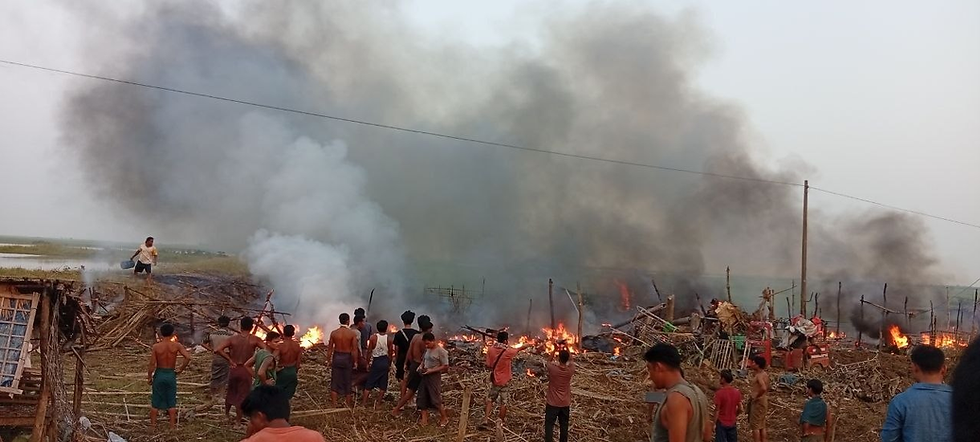
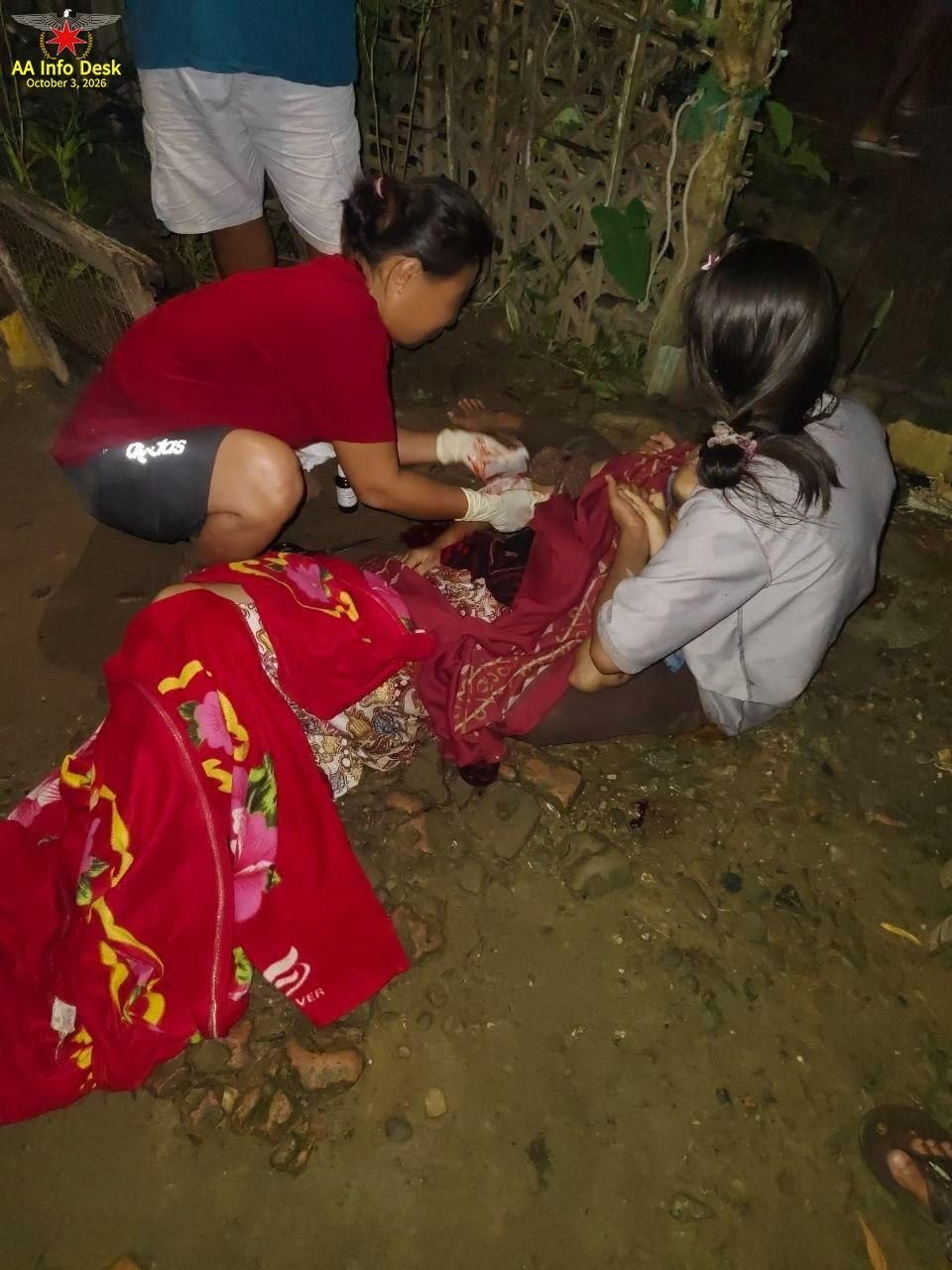
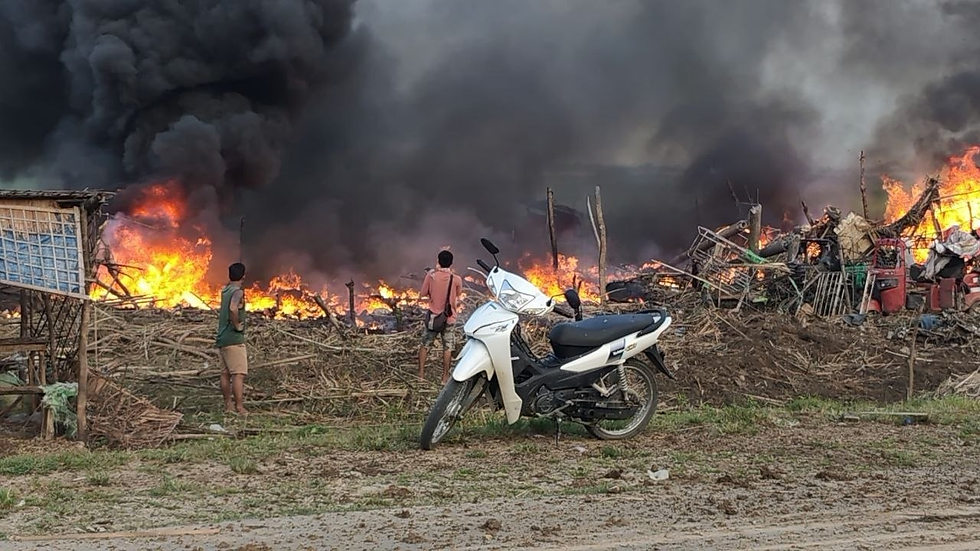
According to ISP-Myanmar, more than 70 civilians have been killed since September 4 as a result of air and artillery attacks. More than 6,000 people from around 24 villages in Kyaukphyu, Sittwe, Ponnagyun and Rathedaung townships have also been displaced.
These figures demonstrate the humanitarian consequences of an offensive increasingly characterized by the combined use of heavy artillery, naval fire and air power.
The danger is particularly serious because the junta has demonstrated its willingness to use air power and long-range firepower in areas where civilians remain present. As the ground offensive encounters resistance, the military could increasingly rely on airstrikes and artillery to compensate for difficulties in advancing on the ground.
This creates a dangerous imbalance: the military may be unable to regain territory quickly, but it retains the ability to inflict substantial damage on civilian populations.
China and Japan add another dimension
The offensive is also taking place against a backdrop of growing international interest in the Rakhine conflict.
China's involvement is particularly important because of its economic and strategic interests in Kyaukphyu. During the height of the fighting, Chinese Embassy Minister-Counselor Jia Junjie visited Kyaukphyu and met Chinese businesspeople, emphasizing Beijing's concern for the safety of Chinese nationals.
Japan has also previously attempted to facilitate informal engagement between the Myanmar military and ULA/AA through former Nippon Foundation chairman Yohei Sasakawa. Such efforts indicate that external actors remain concerned about the possibility that the Rakhine conflict could threaten their economic and strategic interests.
The Rakhine battlefield is therefore no longer simply a military confrontation between the junta and ULA/AA. It increasingly involves regional security, cross-border humanitarian concerns and major foreign economic interests.
Three possible scenarios
ISP-Myanmar identifies three major possible developments.
First, the conflict could become even more destructive.
The fighting is already taking on the characteristics of a total war, with the military attempting to recover lost territory through a large-scale combined offensive. Because Rakhine is strategically and symbolically important to the junta, the military may continue the campaign even without immediate territorial success.
This could produce further civilian deaths, displacement and destruction.
Second, ULA/AA's territorial expansion could temporarily slow.
The junta's offensive has forced ULA/AA and its allied forces to concentrate more heavily on defense. Operations aimed at advancing toward major military and defense-production facilities in Magway, Bago and Ayeyarwady could therefore lose momentum.
In other words, even if the junta cannot retake territory, it may still achieve a limited strategic objective by forcing ULA/AA to divert manpower and resources from offensive operations to defending its existing territory.
Third, the humanitarian and socioeconomic crisis could deepen.
Continued fighting and displacement could put greater pressure on communities under ULA/AA administration. Restrictions on civilian movement may also become tighter as more people attempt to leave Rakhine State.
ISP-Myanmar notes that ULA/AA has already taken action against cases involving human trafficking and attempts to leave the state. A growing displacement crisis could therefore create tension between security and population-movement policies.
There is also a serious risk that the conflict could increasingly acquire an ethnic dimension. Both sides and their supporters are already conducting an intense information and propaganda war on social media. If the military conflict becomes intertwined with ethnic narratives, the consequences could extend well beyond the immediate battlefield.
No clear military victory—but a growing civilian catastrophe
The early results of the junta's Rakhine offensive therefore present a striking contradiction.
The Myanmar military has committed substantial forces and employed ground troops, warships, artillery, aircraft and drones. It has opened multiple fronts and spent months preparing for the operation.
Yet the central military objective—recovering territory from ULA/AA—has not been achieved so far.
At the same time, the civilian cost is already severe, with more than 70 people killed and thousands displaced.
The coming months will determine whether the junta can convert its numerical and firepower advantages into actual territorial gains. If it cannot, the offensive could become another example of the Myanmar military's growing reliance on superior firepower without the ability to translate that advantage into sustainable control on the ground.
For civilians in Rakhine, however, the distinction between military success and failure is increasingly difficult to see. Even without changing the map, the offensive is already changing lives through deaths, displacement and economic disruption.