_edited.png)


Aid Targeting, Perception, and Social Cohesion in Arakan: A Call for Strengthened Impartiality Safeguards
Updated: Mar 31
Warazein, Opinion
February 17, 2026

Executive Summary
Arakan has long ranked among the poorest regions in Myanmar, with chronic underdevelopment affecting multiple communities across the state. In fragile and historically sensitive environments, humanitarian aid delivery must not only meet urgent needs but also preserve social cohesion. Even well-intentioned, donor-driven targeting decisions can generate perceptions of inequity if not grounded in comprehensive, cross-community vulnerability assessments.
This paper does not allege systemic discrimination. Rather, it highlights the structural risks that arise when concentrated aid delivery intersects with fragile inter-communal dynamics. Strengthened transparency, conflict-sensitive safeguards, and inclusive needs assessments are essential to ensure humanitarian assistance reinforces stability rather than inadvertently contributing to grievance narratives.
1. Structural Poverty Across Communities
For decades, Arakan has consistently ranked near the bottom of Myanmar’s development indicators, often cited as second only to Chin State in poverty rates. Limited infrastructure, weak health systems, underdeveloped markets, and chronic underinvestment have shaped livelihoods across rural and urban areas alike.
Poverty in Arakan has historically affected multiple communities. Underdevelopment was not confined to a single demographic segment but reflected structural neglect at the state level.
This baseline vulnerability makes equitable aid targeting particularly important.
2. Donor Prioritization and Operational Constraints
Humanitarian programming is shaped by complex structural factors, including:
Donor earmarking tied to specific crises
Global media attention and advocacy dynamics
Access constraints imposed by authorities
Security limitations in conflict-affected zones
Limited transparency mechanisms in tightly regulated operational environments
In such contexts, programming decisions may legitimately focus on high-visibility crises or particularly vulnerable populations. However, when vulnerability mapping is not clearly communicated across all affected communities, concentrated targeting can generate perceptions of exclusion. In fragile environments, perception becomes a strategic variable.
3. The Risk of Perceived Inequity
In socially fragmented settings, aid allocation patterns — even when justified by mandate — can have unintended secondary effects:
Amplification of grievance narratives
Erosion of inter-communal trust
Politicization of humanitarian space
Reduced acceptance of aid actors
Long-term damage to social cohesion
·
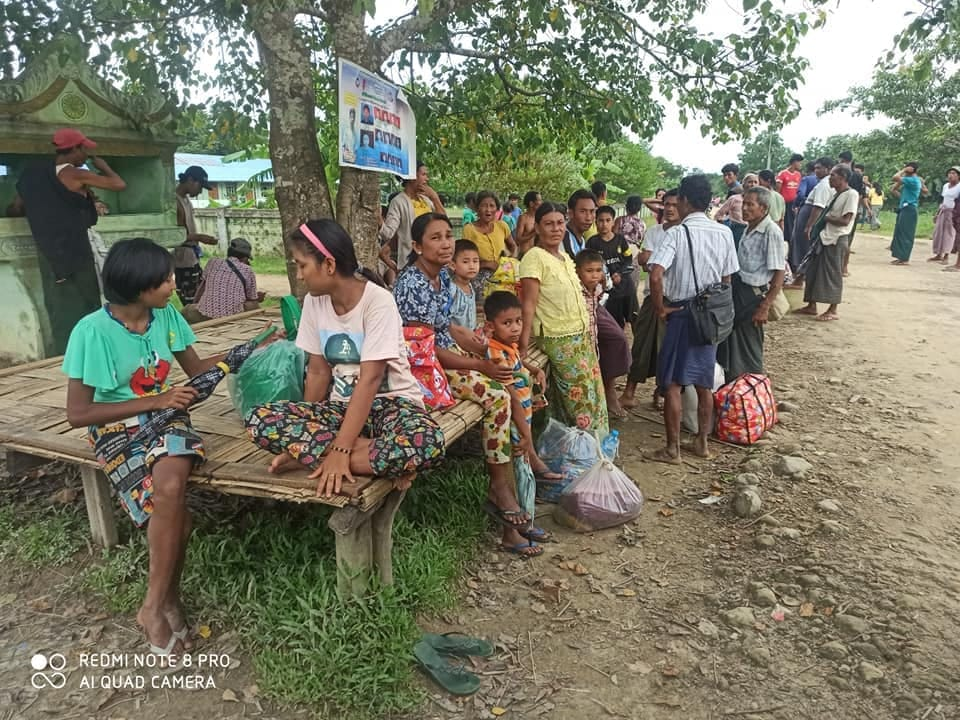
Local accounts from various periods in Arakan have reflected concerns that some impoverished communities perceived themselves as overlooked during certain aid cycles. Whether such perceptions accurately reflected aggregate distribution patterns is a separate empirical question. However, in fragile contexts, perceptions themselves can carry significant consequences.
Humanitarian principles — particularly impartiality — require assistance to be delivered solely on the basis of need, without discrimination. Upholding this principle requires not only equitable programming but also visible procedural fairness.
4. Strengthening Impartiality Safeguards
To mitigate social cohesion risks and reinforce trust, donors and implementing agencies may consider the following measures.
1. Comprehensive Multi-Community Needs Assessments
Ensure vulnerability mapping systematically includes all affected communities across geographic and demographic lines.
2. Transparent Targeting Criteria
Publicly communicate beneficiary selection methodologies to reduce speculation and rumor.
3. Third-Party Monitoring Mechanisms
Where operationally feasible, independent monitoring can strengthen credibility.
4. Conflict-Sensitivity Audits
Integrate structured social cohesion risk analysis into program design and review cycles.
5. Local Consultation Frameworks
Engage locally legitimate administrative structures and community representatives while preserving humanitarian independence.
6. Data Transparency (Where Safe and Feasible)
Aggregated distribution data — disaggregated geographically — can help reduce perception gaps without compromising beneficiary security.
5. Conclusion: Beyond Delivery — Toward Stability
Humanitarian assistance is never purely technical in fragile environments. Even when politically neutral in intent, it can carry political consequences in perception. In regions like Arakan, where historical neglect, poverty, and social fragmentation intersect, aid must be designed not only for efficiency but also for equity that is both real and visible.
Strengthening impartiality safeguards is not an indictment of humanitarian actors. It is a recognition that in deeply sensitive environments, good intentions must be matched with robust institutional design. The ultimate objective of humanitarian action is not only to alleviate suffering, but to contribute — however modestly — to long-term stability and social trust.That goal requires vigilance, transparency, and continuous recalibration.


