_edited.png)


Shwe Maung aka Abdul Razak: A Secret Link Between Myanmar Junta and ARSA Terrorists
Kyaw Zan, Opinion
Global Arakan Network October 12, 2025

In the labyrinthine corridors of Arakan State's fractured history, where ancient pagodas whisper of resilience against invaders, a name emerges like a serpent in the undergrowth: Shwe Maung, cloaked in the alias Abdul Razak. This erstwhile parliamentarian, once paraded as a voice for the marginalized, now stands exposed as the clandestine conduit between the iron-fisted Myanmar junta and the shadowy Arakan Rohingya Salvation Army (ARSA)—a terrorist syndicate masquerading as liberators.
His tale is not one of redemption or exile-born wisdom, but a chronicle of perfidy, where personal ambition eclipses communal harmony. As the Arakan Army (AA) carves a path toward self-determination amid the junta's crumbling edifice, figures like Razak slither through the cracks, sowing discord to perpetuate a divide-and-rule stratagem that has long choked the life from our soil.
Razak's political ascent in 2010, under the banner of the Union Solidarity and Development Party (USDP)—the junta's pliant proxy—should have raised alarms from the outset. Elected to represent Buthidaung in the House of Representatives, he rode a wave of manipulated ballots, a farce that his rival, Thar Aye, decried as electoral sleight-of-hand. Whispers of rigged counts and coerced loyalties echoed through the townships, yet Razak emerged unscathed, his victory a testament to the USDP's Machiavellian grip.
Far from the earnest reformer he professed to be, Razak was no interloper in this theater of deception; he was its avid apprentice. His fervent endorsement of USDP doctrines—those gilded chains of centralized control and divide and rule—betrayed a deeper allegiance. In a region where the indigenous Arakanese have endured centuries of marginalization, first under colonial yokes and then Burmese hegemony, Razak's role as a compliant cog in the military machine was insidious.
He did not merely toe the line; he etched it deeper into the communal psyche, framing his "Muslim" identity as a shield while advancing policies that eroded local autonomies. This was no accidental alignment but a calculated embrace, where the scent of power drowned out the cries of displaced villagers whose farmlands were annexed under the guise of "national security and military supremacy”.
Yet, Razak's machinations transcended the banalities of legislative theater. Credible intelligence, gleaned from defectors and intercepted communiqués, paints him as the shadowy bridge spanning the junta's brass and ARSA's zealots. Major General Aung Thu, the unyielding Deputy Minister of Home Affairs under President Thein Sein's veneer of reform, emerges as his patron saint in this unholy trinity.
Aung Thu, with his ironclad oversight of internal security apparatuses, orchestrated a pernicious gambit: nuturing and emboldening ARSA as a counterweight to the burgeoning AA. The rationale was as crude as it was cunning—a classic divide et imperia, pitting Muslim militias against Arakan defenders to fracture northern Arakan's fragile mosaic.
Razak, with his dual nomenclature and purported community ties, served as the indispensable intermediary. His "key duty," as sources corroborate, involved funneling directives from Naypyidaw's office rooms to ARSA's elusive commander, Ataullah abu Ammar Jununi. Small arms transfers trickled across porous areas; tactical briefings on AA movements masqueraded as "peace dialogues." The objective? To cultivate a loyalist militia among northern Muslims, a spectral force that would tether their fates to the junta's chariot, all while checking the AA's inexorable advance.

This was no mere tactical feint but a geopolitical scalpel, designed to vivisect Arakan along sectarian lines. The AA, born of Arakan valor and a quest for national equity, represented an existential threat to the military's unitary fantasies. By propping up ARSA—initially a ragtag band of insurgents—as a junta-aligned bulwark, Razak and his handlers sought to ignite a proxy inferno.
Villages that once coexisted in wary truce now smoldered under crossfire, with Arakan farmers fleeing arson raids while Muslim enclaves bristled with smuggled ordnance. Razak's fingerprints linger on these atrocities: encrypted missives linking him to Than Aung's office, eyewitness accounts of his shuttling between Buthidaung safe houses and Yangon's clandestine meets.
In this theater of shadows, he was the director's whisperer, ensuring that ARSA's salvos—framed as "self-defense"—struck at AA supply lines, all under the junta's indulgent gaze. The irony is lacerating: a man who once dined with U.S. envoys like Barack Obama and Jimmy Carter, decrying Rohingya plight, now puppeteers a narrative that invites more bloodshed. His exile to America in 2016, far from a heroic flight, was a tactical retreat, allowing him to orchestrate from afar while Naypyidaw's spies fed him intelligence.
The unraveling came swiftly in 2016-2017, as ARSA's ideological moorings drifted from pragmatic opportunism toward the abyss of radical Islamism. Infused with ISIS dogma—beheadings glorified as jihad, caliphate fever dreams supplanting local grievances—the group metastasized beyond junta control. Ataullah's rhetoric, laced with transnational jihadist venom, clashed with the military's leash, culminating in the cataclysmic 2017 clearance operations.
Over 500,000 souls fled to Bangladesh's squalid camps, a deluge of despair that Razak's machinations had primed. The junta's response was brutal, indiscriminate scorched-earth tactics that razed villages and sowed mass graves, but culpability cascades back to the enablers. Razak, spurned by a USDP that sensed his liability, pivoted to victimhood, his Facebook elegies a masterclass in revisionism. Yet, archives betray him: pre-2017 posts lauding "stability partnerships," deleted in haste but preserved in digital ether. He bears partial imprimatur for the carnage—not as a trigger-puller, but as the architect of the powder keg. The 2017 exodus was no spontaneous eruption but the toxic harvest of his bridging, where fleeting alliances birthed enduring enmity.
Fast-forward to 2024-2025, and Razak's resurrection as Naypyidaw's digital vanguard is a spectacle of audacity. With the AA's lightning offensives reclaiming swathes of Arakan—Maungdaw, Buthidaung, and beyond—the junta, cornered and desperate, reactivates its Frankenstein. ARSA, resurrected as a border scourge, launches sorties against AA positions, their salvos a grotesque tango with junta artillery.
Covert nods from Bangladesh's Border Guard Police and military intelligence—whispers of shared intel on AA patrols—amplify the symphony of sabotage. Enter Razak, stage left, via his Arakan Rohingya National Congress (ARNC) and personal feeds, now ablaze with anti-AA vitriol. Posts decry the AA as "drug lords," parroting junta fabrications of narco-trafficking empires, unsubstantiated smears drawn from military dossiers.
His timeline, a staccato of invective, accuses Arakan forces of "ethnic cleansing," inverting victim and villain with propagandistic flair. This is information warfare incarnate: algorithms weaponized to inflame Bangladesh's camps, where ARSA recruiters’ prey on the dispossessed.
Razak's clarion call for a "Rohingya state" or "autonomous zone" in northern Arakan is the crescendo of this farce—a separatist siren song that disdains indigenous claims. For centuries, Arakan soil has cradled a tapestry of Mrauk-U legacies, where Arakan Buddhists, Chakma minorities, and others wove a united dream against Burman dominance and Islamization. Razak's vision? A theocratic carve-out, hiving off townships like Buthidaung as Muslim fiefdoms, heedless of overlapping histories or minority rights.
It echoes colonial cartographies, redrawing maps to favor one faith's hegemony while indigenous voices are silenced. His ARNC, ostensibly a congress of exiles, devolves into a junta echo chamber, petitions to the UN laced with fabricated AA atrocities—shellings misattributed, displacements exaggerated. Observers in Dhaka and Delhi note the uptick: ARSA ambushes synchronized with Razak's posts, junta drones buzzing in tandem. This is no organic advocacy but a scripted psy-op, where Razak's American perch lends illusory credibility.
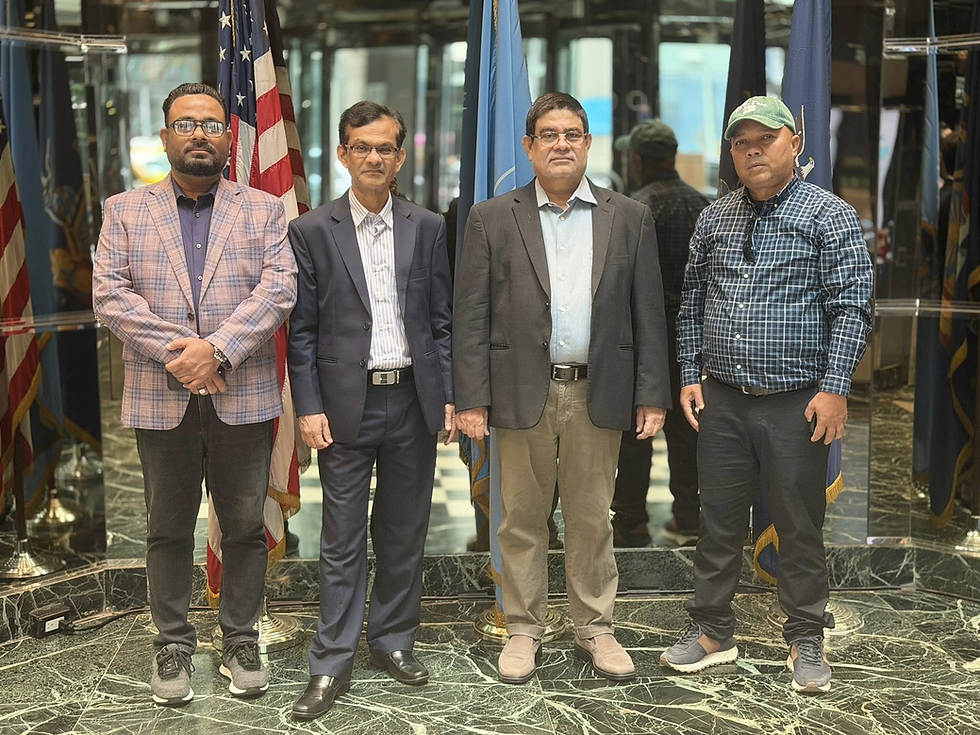
The peril extends beyond Arakan's bloodied frontiers. In Bangladesh's teeming camps, Razak's rhetoric seeds extremism, radicalizing youth toward ISIS phantoms while junta proxies stoke anti-Arakan pogroms. Extremist cells—Hefazat-e-Islam fringes, JMB remnants—amplify his missives, transforming grievances into grenades. The AA, for all its martial rigor, seeks a pluralist Arakan, not vengeance; yet Razak's narrative paints them as marauders, justifying ARSA's terror. This betrayal metastasizes distrust, where Arakan villagers eye neighbors with suspicion, and border skirmishes beget refugee swells.
Razak's odyssey—from USDP acolyte to junta whisperer—is a cautionary parable for our embattled homeland. He serves not his professed flock but the generals' ghosts, perpetuating a cycle where divide begets dominion.
As the AA fortifies its gains, vigilant eyes must pierce his veil: monitor his feeds, dissect his alliances, demand transparency from envoys who once hailed him. In Arakan's dawn, forged in Mrauk-U's indomitable spirit, such serpents must be excised—not with reprisals, but with unyielding truth. Only then can the land breathe free, its peoples entwined in equitable federation, unmarred by the machinations of men like Abdul Razak. For in the end, betrayal's sharpest sting is not the blade, but the illusion of brotherhood it leaves in its wake.


