_edited.png)


Myanmar Junta’s Military Aggression Hinders Implementation of Chinese and Indian Projects in Arakan
Kyaw Zan, Opinion, October 10, 2026

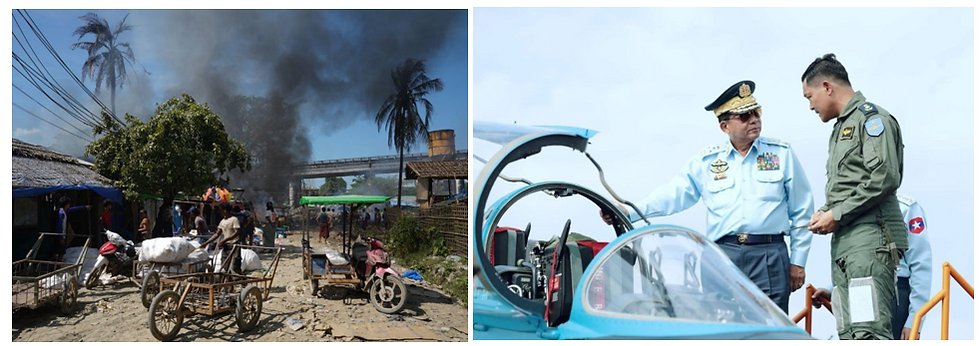
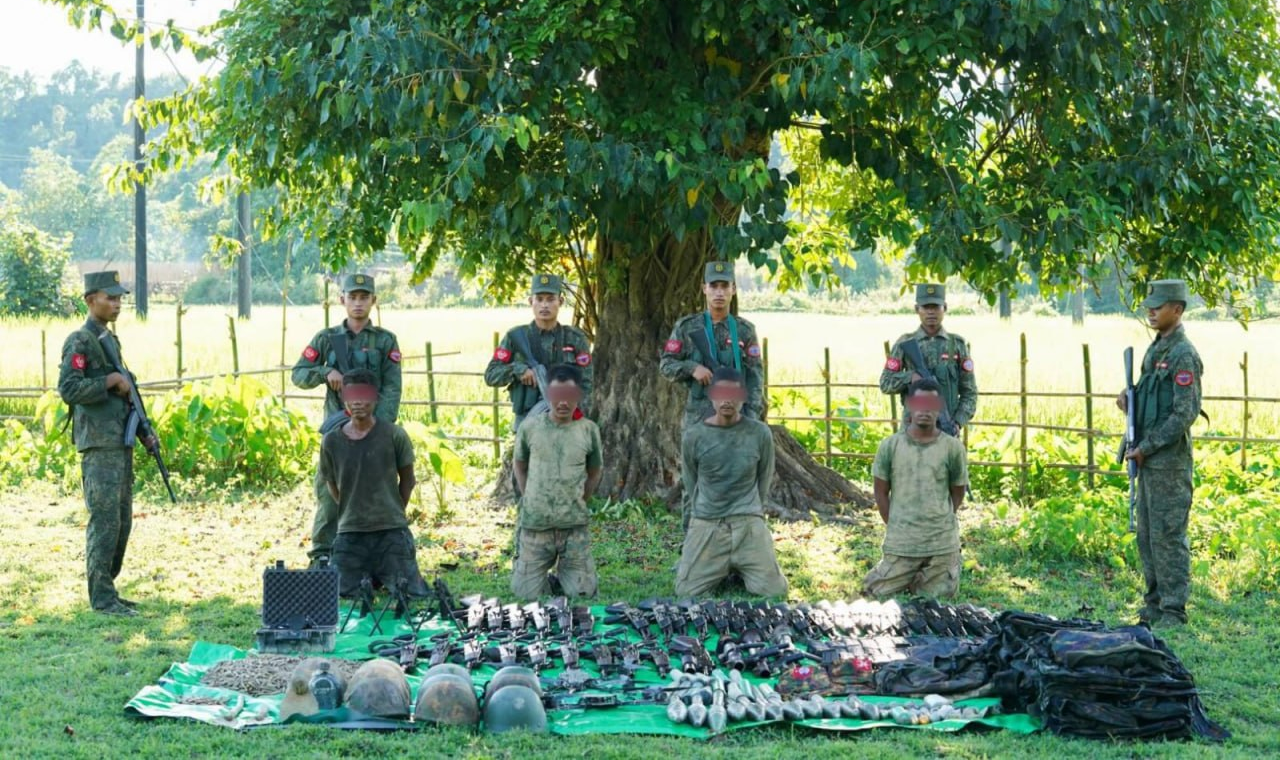
Myanmar’s ongoing military offensives in Arakan are creating serious security challenges for local communities and threatening the implementation of major Chinese and Indian investment projects. Since the beginning of the so-called “4926 Operation” in early September 2026, the Myanmar military junta has continued its offensives around Sittwe and Kyaukphyu, seeking to regain lost territories. However, repeated military operations have failed to reverse the territorial changes that followed the Arakkha Army’s (AA) expansion across Arakan.
Since late 2024, when the AA gained control of more than 90 percent of Arakan, the junta has repeatedly launched offensives but suffered losses of personnel and military equipment. Although China-mediated ceasefires with the Myanmar National Democratic Alliance Army (MNDAA) and the Ta’ang National Liberation Army (TNLA) enabled the junta to regain some territories in northern Shan State, it has yet to restore its pre-Operation 1027 position. The situation demonstrates the limits of the junta’s military campaigns and the continuing challenges it faces on multiple fronts.
As military efforts to regain territory have failed, civilians have increasingly suffered the consequences of the conflict. The junta’s airstrikes and artillery attacks have repeatedly hit civilian areas, including markets, schools, hospitals, clinics and monasteries. According to records from the Humanitarian and Development Coordination Office (HDCO), Myanmar’s military has killed at least 1,243 civilians and injured another 2,729 since the war resumed in late 2023. In 2026 alone, by the end of September, at least 224 civilians had been killed and 507 injured.
These figures indicate a worsening humanitarian situation, with airstrikes becoming the leading cause of civilian casualties. Attacks on civilian areas not only cause immediate deaths and injuries but also undermine public security, disrupt daily life and create an environment in which communities struggle to recover from the effects of war. Continued military aggression therefore carries consequences far beyond the battlefield.
The same instability is threatening the future of Chinese and Indian investment projects in Arakan. China’s Kyaukphyu deep-sea port and Special Economic Zone require a secure and stable environment for their implementation. However, the junta’s ground offensives and air bombardments in Kyaukphyu have created insecurity and instability, killing 21 civilians and injuring 23. Such conditions pose serious challenges to the safety of local communities, project personnel and investment activities.

The United League of Arakan (ULA), which leads the Arakkha government, has committed to protecting the security of these projects and their personnel. This commitment highlights the importance of maintaining security on the ground so that development initiatives can proceed without exposing civilians and workers to unnecessary risks. Nevertheless, continued military attacks undermine the stability required for these projects to move forward.
India faces similar challenges with its Kaladan Multi-Modal Transit Transport Project, which has already experienced delays and is now expected to be completed in 2027. Key project areas, including Ponnagyun, Kyauktaw and Paletwa, have faced repeated junta bombardments and artillery attacks. In these three townships alone, the junta killed 127 civilians and injured another 200 during the first nine months of 2026, according to the figures provided.

These developments raise serious questions about how major infrastructure projects can be implemented on schedule when the areas surrounding them remain exposed to military attacks. Neither investment commitments nor development plans can guarantee progress without adequate security for local populations and project personnel.
China and India have significant interests in Arakan, but protecting those interests requires more than financial investment and infrastructure agreements. Regional powers need to address the security conditions that directly affect their projects and the people living around them. They should use their diplomatic influence and other necessary means to press Myanmar’s military leaders in Naypyidaw to halt attacks on civilian areas and reduce instability in key project locations.
Ultimately, the successful implementation of Chinese and Indian projects depends on a more secure environment in Arakan. Continued military aggression threatens civilian lives, delays development and undermines regional economic cooperation. Protecting local communities and ensuring the timely implementation of these projects should therefore be treated as connected priorities, rather than separate concerns.