_edited.png)


Myanmar Cyclone Strikes Arakan Coast
- 10 hours ago
- 1 min read
On This Day in Arakan History ၊ May 19, 2004
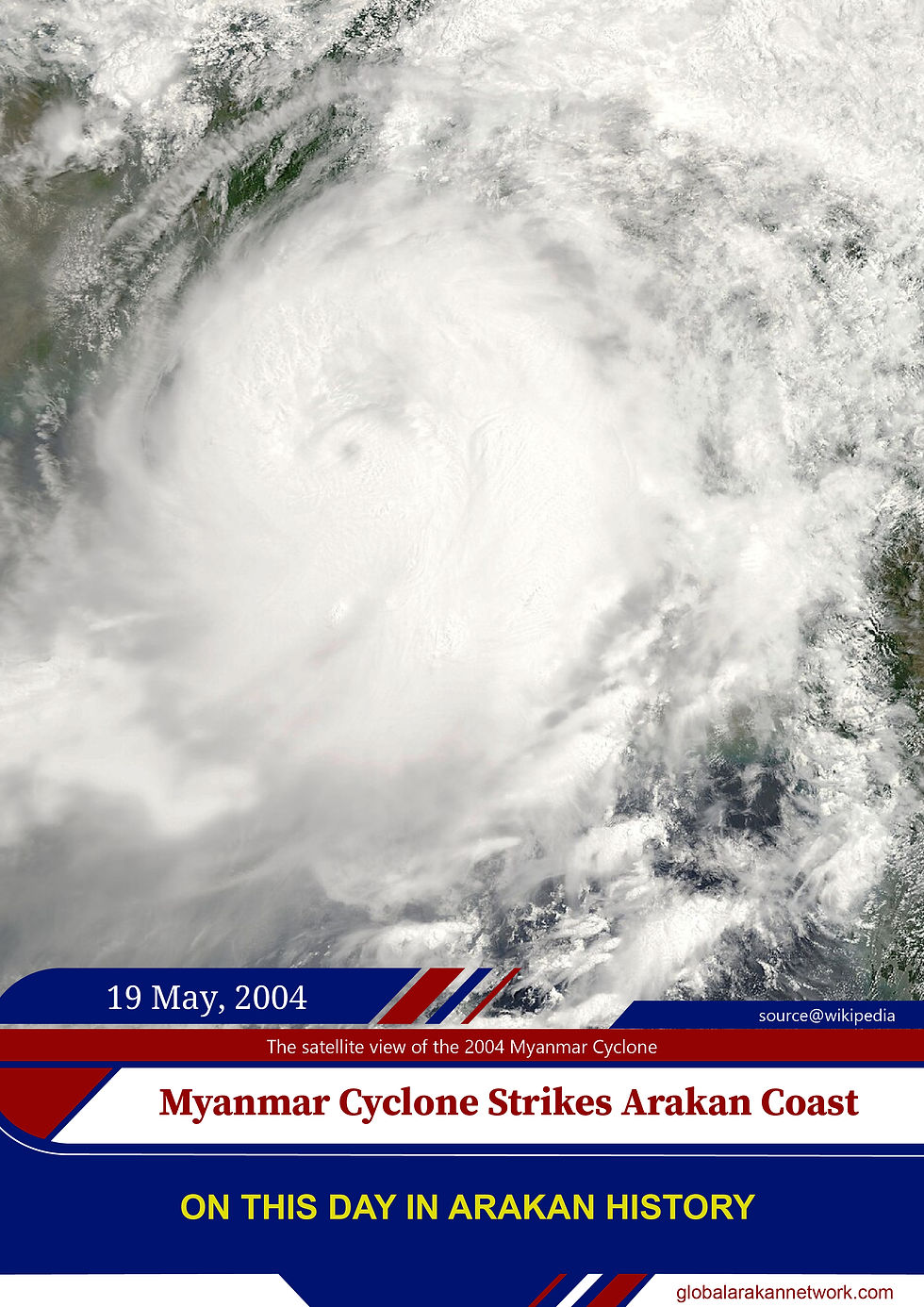
May 19, 2004, remains a date of immense tragedy and environmental devastation, marking the landfall of the 2004 Myanmar Cyclone (formally known as Extremely Severe Cyclonic Storm 02B).
Striking the northwestern coast with winds exceeding 160 km/h, the storm slammed into the Arakan heartland, particularly devastating the townships of Sittwe, Pauktaw, Myebon, and Kyaukpyu.
This was the most powerful storm to hit the region in nearly four decades, claiming at least 236 lives and leaving over 25,000 people homeless as entire villages were submerged by a massive storm surge.
The aftermath of the cyclone exposed the severe limitations of the central military government’s disaster response capabilities. For ten days, the state remained largely silent, under-reporting the death toll while local communities struggled to find clean water, as seawater contaminated the essential village ponds.
This silence and the slow pace of relief efforts fueled deep-seated resentment, reinforcing the feeling that the central authorities were indifferent to the survival of the Arakanese people.
In the contemporary context, the 2004 cyclone is remembered as a painful precursor to the even more catastrophic Cyclone Nargis (2008) and Cyclone Mocha (2023). It serves as a stark historical lesson on the vulnerability of Arakan’s coastal geography and the critical need for local, autonomous disaster management.
For today’s "Rakhita" movement, this event underscores why self-governance is a matter of life and death: only an administration rooted in the region can prioritize the early warnings and rapid relief necessary to protect its people from the recurring fury of the Bay of Bengal.


